
The East Bay Doesn’t End at Walnut Creek
By David Lazo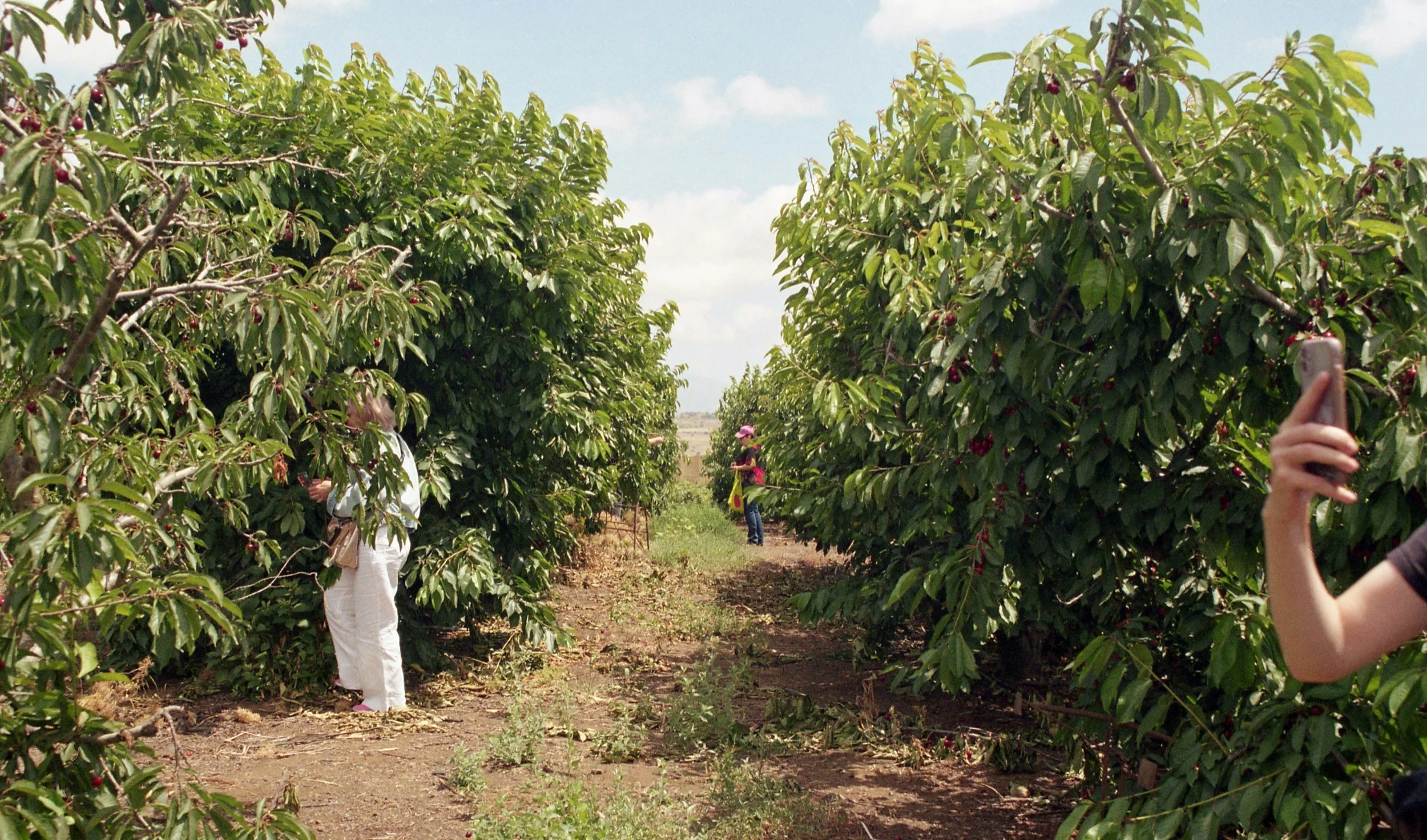
Independent schools in the Bay Area have an access problem they haven’t named yet.
It isn’t financial aid. Most schools have it. It isn’t mission language. Every school has a statement about broadening opportunity and building diverse communities. The problem is geographic. The map these institutions are using to find families was drawn decades ago, and very few people have asked whether it still reflects where families actually live.
My parents bought their first home in Antioch. They both commuted to San Francisco for work, approximately 45 miles one way, back before Antioch had its own BART station. When it came time to think about school, they chose a small Catholic school in the city, not because we were a Catholic family, but because they understood instinctively what being inside a community like that would provide. The school was modest. There was a larger parish school down the hill with a bigger chapel and a bigger footprint. I was at the quieter one. It has since closed, but I still carry fond memories of it.
After a few years, my parents moved us 14 miles closer into the heart of the East Bay, to Concord. They were upgrading, looking for a better school environment, a more family-oriented neighborhood. A place where I could ride my bike after school, walk to the community library, feel rooted. They were making strategic decisions about their children’s future with the tools and information available to them. Independent school was not one of the options anyone had handed them.
So for most of my upbringing, I was in public school. And I loved it. Or more precisely, I loved learning. I found ways to stay academically nourished. What I didn’t see at the time was that some of the limits I encountered weren’t about my appetite. They were about program capacity and institutional bandwidth. I now know there are even stronger public schools within 15 to 20 minutes of where I graduated that I wasn’t aware of. The information landscape was thin, and nobody was filling it in. Many of my colleagues have spent careers trying to close this information gap. Now AI is closing it faster than any outreach program ever did.
I didn’t fully understand what any of this meant until I was sitting on the other side of the desk.
When I oversaw enrollment at College Prep, I found myself asking a version of the same question I had been living without knowing it. Commuting patterns tell you a great deal about which parts of a family’s life are already mobile. A parent driving from Concord to San Francisco every morning has already demonstrated a willingness to cross geography for something worth the trip. The school just has to enter their field of vision. For most families east of Walnut Creek, it never does. Because for a long time, it didn’t need to. When circumstances keep an institution insulated from pressure to look outward, it stays where it is.
I suppose both sides were content. Families east of Walnut Creek had their schools. Independent schools had their applicant pools. The arrangement held.
I thought about my own middle school classmates. Strong students. Curious kids. Families with real educational ambition. For them, the conversation was about public school or Catholic school. Independent school wasn’t a rejection. It wasn’t even a consideration. It existed outside the frame entirely. Not because these families were turned away, but because they were never part of the conversation.
Many years later, I spent time inside institutions I was never supposed to know existed. People see my professional background, the institutions on my resume, the way I present in professional settings, and they construct a story about who I am. They don’t see Antioch. They don’t see the Latinidad I carry, which has now become the demographic most needed to sustain independent school enrollment yet remains woefully underrepresented in these communities. They don’t see parents who commuted across the Bay and made careful decisions about schools and neighborhoods with the information available to them.
Our privilege keeps us blind to what schools should be doing: serving the communities they surround. And then acting as beacons when those communities shine.
I share this story not because it is unusual. But because it isn’t.
The Map is Outdated
Most enrollment conversations about the East Bay are really conversations about a narrow slice of it. Oakland. Berkeley. Lamorinda. Danville. Occasionally Walnut Creek.
And then the map fades.
This reflects a geography organized around San Francisco as the center. If you draw your recruiting radius from the city, you capture the communities closest to it and stop. But San Francisco is no longer the economic center of the Bay Area it once was. The jobs that brought my parents into the city moved east to the Tri-Valley or further south to Silicon Valley, the new epicenter. The residential consequence of this shift is that middle-class families have moved east. Contra Costa County is not a distant suburb. It is where a substantial portion of the Bay Area’s working and professional class actually lives.
Layer on the post-pandemic reality of remote work, and the picture becomes clearer still. Living in the East Bay today means encountering professionals who commute once or twice a week to Palo Alto, Sunnyvale, or Mountain View. The flexibility of this arrangement comes at the cost of very long days, and it means that families with strong educational values are now rooted in communities like Livermore and Tracy, not just Antioch and Brentwood. With commutes restructured, some families have a stronger desire to remain close to home and will not travel far for a school choice the way they once might have.
Drive east past Walnut Creek and you encounter Concord, Clayton, Pleasant Hill, Pittsburg, Antioch, Brentwood, Oakley. Communities measured in hundreds of thousands of people. Brentwood alone grew 287% between 2000 and 2022, from roughly 23,000 residents to nearly 67,000. This is not a suburb quietly filling in. It is a city being built in real time, by families who needed somewhere to go.
Take a family from Brentwood or Concord, same income, same educational values, and place them in Westchester County or Montgomery County or the suburbs of Chicago. They have likely already been recruited. Someone has already shown up and said: this school is for a family like yours.
In the East Bay, nobody has asked.
I know this because I sat in a boardroom once and suggested we expand our recruiting eastward into Contra Costa County. The response I got was: “What about Oakland?”
The response has stayed with me. It wasn’t malicious. I don’t believe it was even fully conscious. But it revealed how many institutions still understand the East Bay through a geography that no longer reflects where families live. This is what an outdated map sounds like when it speaks out loud.
The Paradigm Must Shift
This is not a criticism of any particular institution. Rather it is actually an observation about a paradigm that made sense in one era and is straining under the weight of another.
Most schools, public or private, form with a certain geographic logic. In the East Bay, this meant Oakland as home, San Francisco as the cultural and demographic center of gravity, and the broader region understood as an extension of a city-anchored world. This made sense for a long time. It makes considerably less sense now.
The numbers tell the story plainly. San Francisco ranks last among the top 100 most populous cities in the United States in its share of residents under 18. Children made up 13.4% of the city’s population in 2010 and just 13% in 2020, continuing a decline that stretches back to 1990. Overall, private school enrollment in San Francisco is down nearly 10% since 2000. Catholic K-8 enrollment has fallen 43% in the same period. The families are not there in the numbers they once were, and the schools built around recruiting them are feeling it.
Look at where people have moved in the past decade, and especially since the pandemic. The residential footprint of Bay Area families has shifted substantially eastward. Contra Costa County has absorbed a significant portion of the middle class that can no longer afford to live closer to the urban core. These are not families retreating from ambition. They are families making rational decisions about housing, space, and quality of life, and bringing their educational values with them.
The schools that will thrive in the next thirty years are the ones willing to think of themselves as regional beacons rather than city-adjacent institutions. Not because the city doesn’t matter. But because the region has quietly become something larger than the city, and the families who live in it are waiting to be asked a question nobody has thought to ask them yet.
When Opportunity Becomes Geographically Misaligned
Independent schools talk about access constantly. Financial aid budgets have grown. Diversity initiatives are taken seriously. The commitment, at most institutions, is genuine.
And yet the recruiting territory hasn’t meaningfully changed in thirty years.
The families in Brentwood and Concord and Antioch are not being turned away. They are not showing up and being told the school isn’t for them. They are simply not in the conversation. Many don’t know the product exists in a way that feels relevant to their lives. The price alone, seen without context, without a conversation about financial aid, without anyone explaining what the school actually is and what it could mean for their child, closes the door before it opens.
This is not an income problem. It is a visibility problem. And visibility is a choice institutions make, whether they recognize it as a choice or not.
Consider the household income data. The median household income in Brentwood for families with a head of household between 25 and 44 is $178,178. In Clayton, it is $172,226. These are not families for whom an independent school is categorically out of reach. These are families who have never been shown the door, let alone invited through it.
The communities east of Walnut Creek contain exactly the attributes schools describe when they talk about who they want. First-generation college families. Immigrant families. Latino, Black, Asian, Middle Eastern, and mixed-race households. Healthcare professionals, public servants, entrepreneurs, skilled tradespeople. Multi-generational households navigating questions about opportunity and identity and what the next generation deserves.
The diversity conversation many schools are working hard to have on campus often begins with populations that already exist within driving distance. The recruiting map just doesn’t reach them.
What Independent Schools Are More Like Than They Admit
From the outside, independent schools can look like bastions of privilege. I thought this myself, even as a college admissions officer, before I understood them from the inside.
They have privilege, certainly. But they are more like their Catholic school counterparts than most people realize or most independent schools would comfortably acknowledge. They are communities built around shared values. They care about the whole student. They are run by people who genuinely believe in what they do. The difference, in many cases, is not philosophical. It is informational. Catholic schools felt approachable to families like mine because Catholic schools showed up. Because the cultural infrastructure existed to carry the message.
Independent schools have largely left this work undone in the communities east of Walnut Creek. The result is a self-fulfilling map. Schools don’t recruit there because families don’t apply. Families don’t apply because they’ve never been invited.
Now, facing real demographic and financial pressure, some schools are beginning to look east. Expanding territory. Rethinking feeder assumptions. This is worth something. But it raises a question worth sitting with:
If these communities were worth finding now, what were we saying by not looking before?
First, Be Visible
Access in independent schools is discussed at length. But access requires a first step many institutions skip entirely.
These schools must be visible. Seen. Known. Not hidden behind a perception of exclusivity whose criteria nobody outside the walls fully understands.
There are practical answers to this problem, and they require an entirely separate piece. But the framework is worth naming here. Schools serious about reaching new communities must understand who these newer communities are and how an independent school education speaks directly to their aspirations. They need community members inside these neighborhoods who can carry the message in ways an admissions brochure never will. They need to build pathways with students early and prove through action, not language, that they can transform lives. They need to track enrollment intelligence with the same rigor they apply to advancement. And they need to plan for a two to three year latency period before new community investment yields applicants, with the same patience a major gift officer brings to a capital campaign.
This work also requires that institutions revisit their structures, their culture, and their unspoken norms to ensure they genuinely serve the families they are looking to welcome.
Visibility without belonging is just marketing. Families can tell the difference.
The Strategic Argument
I am not making a moral argument. Schools that have overlooked Contra Costa County are not bad institutions. They are institutions operating on an outdated map that made sense in one era and makes considerably less sense in this one.
The Bay Area has already updated its map. The center of economic gravity has shifted, and we have all seen how disruptive the updated map has become. The old Westfield Mall in San Francisco. Shuttered. Union Square undergoing rapid transformation. Malls in Concord and Antioch waning. Santana Row in Santa Clara County flourishing. The residential footprint of the middle class has moved. The communities east of Walnut Creek are not a charity case or a diversity initiative waiting to happen. They are a market that has been systematically overlooked because institutional attention follows familiar patterns, and familiar patterns are comfortable until they aren’t.
Many independent schools speak fluently about Oakland and Lamorinda. Few can tell you what is happening in Antioch, Brentwood, Concord, or Clayton. Yet the future of Contra Costa County is being written just as much in these communities as in the ZIP codes schools already know by heart.
The families are there. The aspiration is there. The question is whether schools are willing to update their maps.
When I drive along Highway 4 toward Brentwood to pick cherries every summer, I think about how much has changed. The proposals to convert the former Concord Naval Weapons Station into housing. The eight-lane highway that connects Antioch and Concord that was once four lanes. The BART extension to Antioch was once an elusive dream. The fact that picking fruit used to be what brought families out to Brentwood. Now it brings families from Lamorinda and Oakland to engage in an extracurricular pastime that once sustained the then-small agricultural city.
The schools that understand these changes are better suited to outlast this version of the map. More importantly, they are the ones positioned to bring transformational educational experiences to these new epicenters of community development, the same kinds of experiences long associated with urban institutions, now available to the families building their lives east of the hills.
David Lazo is the founder of Journeys Edu and has spent nearly two decades in admissions and financial aid at independent schools and universities across the Bay Area, including Stanford, Vanderbilt, College Prep, Woodside Priory, and Bentley. He advises families in Lamorinda and throughout the region on private, parochial, and higher education decisions, with a focus on fit, strategy, and long-term outcomes. He also works with schools on strategic enrollment initiatives and promoting the idea of enrollment intelligence as a framework for sustaining the schools of tomorrow.