
What Lamorinda Parents Need to Do Before Junior Year
(That No One at School Will Tell You)
By David Lazo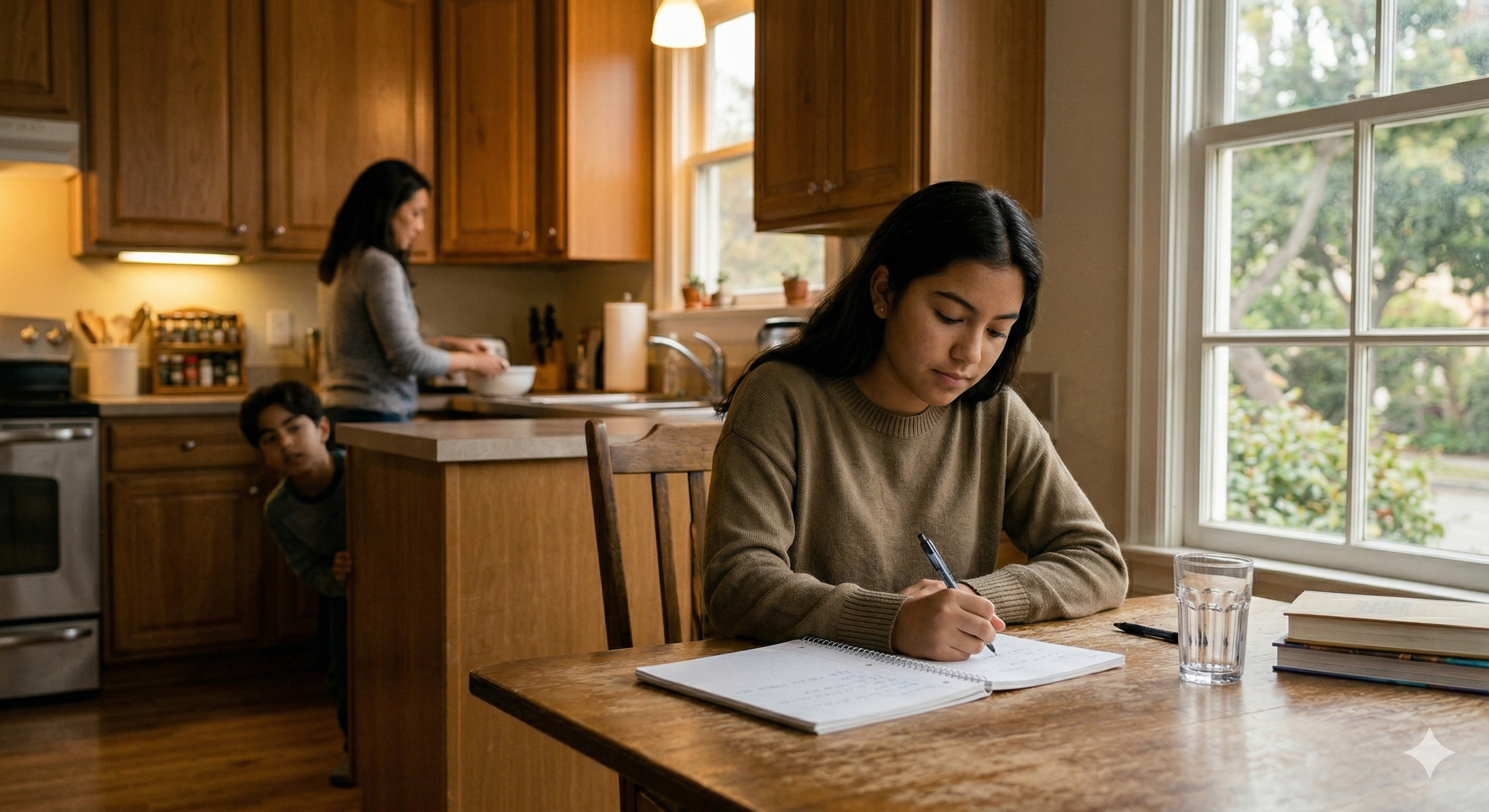
Image created in collaboration with Gemini AI.
Lamorinda is one of the strongest public school communities in California. Acalanes, Campolindo, Las Lomas, and Miramonte consistently produce highly capable, well-prepared graduates. The teachers are strong. The programs are real. The outcomes, for many students, are genuinely excellent.
And yet, every year, families arrive at the start of junior year, surprised by how much work they did not know they were supposed to be doing.
Here is some perspective for parents who want to avoid this moment.
What the School Is Actually Responsible For
Lamorinda public high schools provide a strong academic foundation. They offer rigorous coursework, credentialed teachers, and college counseling staff who work hard under real constraints.
What they cannot provide is individualized, long-range strategic guidance for every student.
A college counselor at a public high school may carry a caseload of 300 to 500 students. In this environment, the counselor's job is to ensure students meet requirements, submit applications, and access available resources. It is not to build a four-year positioning strategy for each student, track how a summer program fits into an emerging narrative, or advise a family on whether a particular extracurricular is strengthening or diluting a student's profile.
To be clear: this is not a criticism. It is a structural reality.
The families who understand this early do not wait for the school to prompt them. They build the map themselves, or they find someone to help them build it.
First, an Important Distinction
Not every student needs this map.
If your student is aiming toward the California State University system, community college, or other institutions that evaluate applicants primarily on GPA and coursework, Lamorinda's strong academic environment is well-equipped to get them there. These are legitimate, valuable pathways. For students on this trajectory, the school handles the essential work and handles it well.
What follows in this piece is for a different group: families whose students are aiming at selective private universities, UC campuses with holistic review, or highly competitive programs where a transcript alone is not sufficient. For these students, the school's preparation, while genuinely strong, is not the whole picture.
If this is your family, keep reading.
The Hidden Work of College Prep
Most parents in Lamorinda understand that grades matter. They know AP and honors courses carry weight, and test scores are part of the picture. This is the visible layer of college preparation, the one the school manages.
The hidden layer is different. It is the work that happens outside the classroom, outside the school's line of sight, and often outside the family's awareness until it is too late.
This hidden work includes:
Narrative development. Colleges are not assembling transcripts. They are reading students. A student with a coherent story, a clear sense of what they care about and why, reads differently from a student with equivalent credentials and no discernible thread. This story does not write itself in senior year. It is built across three or four years of intentional choices.
Activity architecture. The question is not whether a student is busy. Most Lamorinda students are very busy. The question is whether the activities add up to something. Depth, leadership, and genuine investment in one or two areas carry more weight than a broad list assembled to fill a resume.
Summer decisions. Summers in 9th and 10th grade are not free time to be filled. They are some of the most valuable positioning opportunities available to a student. What a student does, and why, contributes to the narrative colleges will eventually read.
List construction. Building a college list is not a senior year task. Understanding which institutions are realistic, which are ambitious, and which offer genuine fit requires time, research, and honest assessment. Families who begin this work early make better decisions with less pressure.
Teacher relationships. Letters of recommendation are written by teachers who know a student. Students who invest in those relationships across 9th and 10th grade have more options in senior year. Students who begin thinking about this in September of 12th grade often do not.
None of this work appears on a school calendar. None of it will be assigned. It is the responsibility of the family.
What Well-Prepared Families Do Differently
The families who arrive at junior year without panic share a few common characteristics.
They started the conversation early. Not in a high-pressure way, but in an ongoing, low-stakes way. College and high school planning was part of the family's dialogue before high school began. Students in these families understood the landscape before they were inside it.
They paid attention to fit, not just prestige. Well-prepared families think about what kind of college experience their student actually needs, not simply which names carry the most recognition. This orientation produces better applications and, ultimately, better outcomes.
They treated middle school as preparation, not a waiting room. The habits a student develops in 7th and 8th grade, around organization, intellectual curiosity, self-advocacy, and resilience, are the habits they carry into high school. Families who take this seriously are not pushing their middle schoolers toward achievement. They are building the foundation that makes high school sustainable.
They got an outside perspective. Well-prepared families understood that the school counselor's job and their job were not the same. They found an advisor who could see the whole picture, ask the questions the school was not positioned to ask, and help the family make intentional decisions rather than reactive ones.
Why Lamorinda Makes This Harder
There is a particular dynamic in high-achieving public school communities worth naming directly.
When the school is strong, it is easy to assume the school is handling it. The grades are good. The teachers are engaged. The student is happy. What else is there to do?
This is precisely the environment where the hidden work goes undone.
Families in communities with weaker public systems often seek outside support earlier, because the gap is more visible. In Lamorinda, the gap is less visible. The school provides so much that it is genuinely difficult to see what it does not provide.
The families who recognize this early are not the most anxious ones. They are the most clear-eyed.
What This Looks Like in Practice
If your student is currently in middle school, the most valuable thing you can do is not find the right tutor or enroll in the right enrichment program. It is to understand what the next four years actually require, and build a framework for navigating them intentionally.
This means having an honest conversation about your student's strengths, interests, and the kind of college experience that will actually serve them. It means thinking about high school course selection before the choices are made under time pressure. It means understanding the difference between a student who is performing well and a student who is positioning well.
At Journeys Edu, this is where much of our most valuable work happens. Not in the panic of senior year, but in the quieter years before it, when there is still time to build something coherent. Families in Lamorinda who engage early arrive at junior year with a plan. Those who wait often arrive with a problem.
The school will do its job. The question is whether you are doing yours.
A Final Word
Lamorinda public schools are a genuine asset. Choosing to send your child through this system is not a compromise. For many families, it is the right decision.
What the system cannot do is manage the work that sits outside its scope. For students aiming at selective institutions, this work is real. It accumulates across years. And it is almost entirely invisible until junior year, when its absence becomes suddenly, unmistakably clear.
The families who navigate this well are not the ones with the most resources. They are the ones who understood early that the school and the family have different jobs, and made sure both got done.
David Lazo is the founder of Journeys Edu and has spent nearly two decades in admissions and financial aid at independent schools and universities across the Bay Area, including Stanford, Vanderbilt, College Prep, Woodside Priory, and Bentley. He advises families in Lamorinda and throughout the region on private, parochial, and higher education decisions, with a focus on fit, strategy, and long-term outcomes.